Millennium Development Goals: Ghana will probably secure 80% of drinking water coverage by 2015
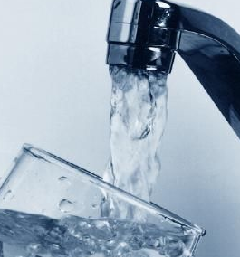 On February 16th, 2012, the president of the Republic of Ghana Professor John Evans Atta Mills addressed the nation. It was his 4th State of the Nation Address at Ghana’s Parliament House since his election in December 2008. One of the important information he delivered was concerning the efforts made by his government in the framework of the Millennium Development Goals: «The many interventions that we have made are intended to ensure, that by 2015 we would have raised the current level of water from 62% to 80%». Indeed, since 2009, the government of Ghana has constructed «hundreds of boreholes fitted with hand pumps, hand dug wells fitted with hand pumps and also piped water systems throughout the country. Several others have been rehabilitated».
With regards to this result, Professor Atta Mills definitely places itself in the top position of developing countries’ leaders who have committed themselves to remove their population from the scourge of poverty and starvation. He then proves that it is possible to come out of the trap of poverty. All is matter of commitment and discipline.
Drinking water coverage belongs to the very first goal. This means that even if we do consider the Ghana’s case as a good example of government’s commitment, we are still very far below the satisfactory line. For details about the 8 Millennium Development Goals, please refer to the following link: http://www.un.org/millenniumgoals/
GOAL 1:
ERADICATE EXTREME POVERTY & HUNGER
- The global economic crisis has slowed progress, but the world is still on track to meet the poverty reduction target
- Prior to the crisis, the depth of poverty had diminished in almost every region
- Deterioration of the labour market, triggered by the economic crisis, has resulted in a decline in employment
- As jobs were lost, more workers have been forced into vulnerable employment
- Since the economic crisis, more workers find themselves and their families living
in extreme poverty
- Hunger may have spiked in 2009, one of the many dire consequences of the global
food and financial crises - Progress to end hunger has been stymied in most regions
- Despite some progress, one in four children in the developing world are still underweight
- Children in rural areas are nearly twice as likely to be underweight as those in urban areasn
- In some regions, the prevalence of underweight children is dramatically higher among the poor
- Over 42 million people have been uprooted by conflict or persecution
Target 1.A:
Halve, between 1990 and 2015, the proportion of people whose income is less than $1 a day
Target 1.B:
Achieve full and productive employment and decent work for all, including women and young people
Source: United Nations
Author: Moses Chiadjeu Africa & SciencePhD Scholarships in Ultrafast 2D-IR Spectroscopy at the Universität Frankfurt (Germany) Décentralisation, synonyme de Développement? Réflexion sur un paradigme idéologique très en vogue sous les tropiques
Comments are currently closed.