The ambiguous role of the Roman Catholic Church in Cameroon’s political life
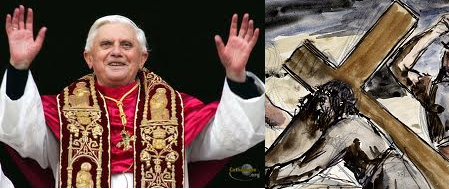
How neutral is the Roman Catholic Church in Cameroon? This question was raised in our forum of debates a few weeks ago. Participants to the email exchanges questioned the role of the Christian missionaries in postcolonial Africa. The majority of our members concluded that the role of the Christian Church in postcolonial Africa was negative. However, the most preoccupying position was that of the extremists according to whom none of the imported religions can better serve Africa and Africans, for they are in total contradiction with the African cosmogony. Notwithstanding the relevance of those critical views, one of the weaknesses of Christian missionaries’ critics was their lack of categorisation among Christian churches operating in Africa. The critics were unable to identify conflicting trends within some churches, thus presenting Christian missions in Africa as a uniform body of men and women operating under the umbrella of a unique and coherent doctrine. Fortunately, there are enough evidences asserting the contrary. In an open letter to the Cameroonian bishops published on November 8th, 2011 for example, a Cameroonian Jesuit priest deplore the immoral an unfaithful attitude of the Church vis- à- vis the Government. Considering the Cameroonian bishops’ behaviour in electoral context as treason toward their fellow citizens, the priest then calls for more responsibility. Criticising the Episcopal Conference of Cameroon for their attitude in electoral context, Mr. Ludovic Lado SJ highlights a reality which is yet to be seen by several “afro-centrists”. Indeed, even within the so-called “colonial” Church, opposing voices could be heard. The Roman Catholic Church could also be an arena of confrontation among citizens having different viewpoints on crucial political issues.
Mr. Ludovic Lado SJ has proven to be particularly analytical and critical vis-a-vis the Church’s Elite and we have come to learn more about his writings. We hereby reproduce one of his articles, with the permission of the editor of the online journal The Way,( www.theway.org.uk ) to whom we are very thankful. Any reader of this article could easily notice the historical roots of a suspicious Church – State’s relationship in postcolonial Africa.
The Roman Catholic Church and African religions: A Problematic Encounter
The second wave of christian missionaries, following some Portuguese pioneers in the sixteenth century, reached sub-SaharanAfrica during the 1800s. When they arrived, they were confronted with two major religious forces: African religions and Islam. But in theareas where they settled, the Islamic influence was not generally strong; it was African religions that were holding together the socialand political fabric. Roman Catholics have been encouraged to think in positive terms about other religions since Vatican II, and in particular since the publication of Nostra aetate, the Council’s ‘Declaration on the Relation of the Church to non-Christian Religions’. In the African context, the effect has been to promote what is called ‘inculturation’: the attemptto discern the so-called ‘authentic’ African values or symbols, and to assimilate these within the version of Christianity received from Western missionaries.
And since there is no clear demarcation between African cultures and African religions, this process of ‘inculturation’ isessentially ‘interreligious’. But what do we really mean today by ‘African religions’ and‘African cultures’ after colonialism? What has been lost and what isleft? Who are the African partners in the so-called dialogue? There areor have been three ways in which Christianity has sought to engagewith the reality of Africa: colonial Christianity; inculturation; and interreligious dialogue with Islam and with African religions. In this article I want to argue that all of these models have severe limitations. At the end I will suggest a more straightforwardly theological approach: the awkwardness connected with Christian witness in Africa today infact reflects the vulnerability intrinsic to any authentic evangelization, any sustained witness to the crucified Christ. Before continuing, I draw attention to my choice of the term ‘African religions’ instead of the usual ‘African traditional religion’. The conventional term gives a quite wrong impression that we are dealing with something impervious to the upheavals of history, whereas African religions are in fact as dynamic as any other religion. Moreover, there are many forms of religion in Africa. Though there aresome common factors, African religions vary according to whether it isfarming, coastal or forest people who are practising them. Though there are similarities between these religions, it is wrong to lump themtogether disparagingly as ‘fetishism’ or ‘animism’.
Mission and Violence
Early Christian missionary activity in Africa was both ethnocentric andiconoclastic in its attitudes towards African religions:…
«neither in the nineteenth nor in the early twentieth centuries did missionaries give much thought in advance to what they wouldfind in Africa. What struck them, undoubtedly, was the darkness ofthe continent; its lack of religion and sound morals, its ignorance,its general pitiful condition made worse by the barbarity of the slave trade. Evangelization was seen as liberation from a state of absolute awfulness, and the picture of unredeemed Africa was often painted in colours as gruesome as possible, the better to encourage missionary zeal at home»1
In historical context, such attitudes are all too easily understandable. Firstly, the missionaries were children of an age in which so-called early travellers’ accounts, that were ‘based on inaccurate information and cultural prejudice made African religions appear to be a morass of bizarre beliefs and practice’.2 Evolutionist theories presented African religions as primitive, merely the first stage of the evolution of human religious history; and such ways of thinking remain influential long after they have become discredited among scholars. Secondly, Western Christianity itself was being challenged and disrupted in the nineteenth century by rationalism and secularism. It was therefore rather on the defensive, and not in a position to be open to dialogue with religious ‘otherness’. Thirdly, the evangelization of sub-Saharan Africa took place within the context of colonisation. For all the benefits it brought (not only the preaching of the gospel, but also the foundation of schools and hospitals), it was essentially a violent enterprise. ‘Missionary societies tended to work in areas where theirhome governments were directly involved’,3 behaving often as cultural agents of their own nations. Indeed, in the nineteenth century, Christianity reached black Africa as part of the Western campaign of‘civilisation’ meant to ‘redeem’ the ‘dark continent’ from the claws of ignorance and devilish superstition.4 The heroic commitment of Christian missionaries, not only to the preaching of the gospel but alsoto the implantation of schools and hospitals, was part of this general programme of elevating the ‘primitive’ African to the level of the‘civilised’ Westerner. In such a context of unequal power relationships, a genuine dialogue between Christianity and African religions was simply notpossible. The missionary had come to give and not to receive; Africans had nothing to give but everything to receive. Just as civilisation meant substituting Western cultures for African cultures, evangelization came to mean replacing African religions with Christianity. Overzealous missionaries even destroyed traditional ritual places in an attempt to persuade the evangelized that their old ways were worthless. In this early phase of Christian missionary activity, genuine dialogue with African religions was never envisaged, and the more recent movement towards ‘inculturation’ is in part a guilt reaction against this violent, contemptuous past.
We are very thankful to the online journal The Way (www.theway.org.uk) for the kind permission to reproduce this very instructive article. The complete paper is available at the following link: The Roman Catholic Chruch and African Religions- by Ludovic Lado SJ – Article
Picture: denistouret.fr, paulsimon.fr
Commonwealth Scholarships for Developing Countries Homosexualité au Cameroun: l’Afrique au piège du droit moderne?
Comments are currently closed.